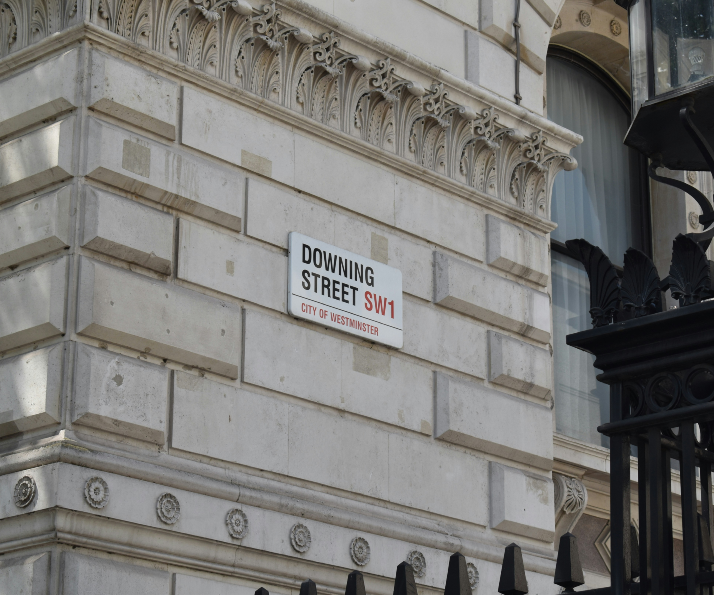

On January 31, 2020, Britain finally “did Brexit”. Boris Johnson stood outside Downing Street promising a reborn, buccaneering economy, freed from Brussels bureaucracy and ready to conquer the world.
Six years on, the mood has changed
Six years later, the political weather has changed so dramatically that the contest among Labour’s leading figures increasingly resembles a bidding war over who can edge Britain back closest to the European Union, and how quickly.
Sir Keir Starmer began with the careful language of “making Brexit work”. Wes Streeting talks openly about the economic self-harm of the current settlement. Andy Burnham sounds ever more like a man auditioning for the role of Britain’s future European social democrat. None of them quite says “rejoin”, not yet anyway, but the direction of travel is unmistakable.
For someone instinctively and unapologetically pro-European, this ought to feel like vindication. Brexit has delivered exactly what many business leaders feared, sluggish trade, weak investment, endless friction and a Britain that appears smaller in the eyes of international capital. The fantasy of Singapore-on-Thames dissolved into the reality of anaemic growth and exhausted public finances.
Labour is rediscovering Europe, but not enterprise
Yet there is little comfort in Labour’s apparent rediscovery of Europe because there remains remarkably little evidence that Labour understands business itself.
The modern Labour Party talks fluently about regulation, industrial strategy and “partnership”, but often with the air of people who regard wealth creation as something faintly embarrassing. Business is treated less as the engine of prosperity and more as a useful utility to be managed, taxed and occasionally scolded.
Europe helps, but it is not a growth strategy
Rejoining the EU, or moving significantly closer to it, would unquestionably improve Britain’s economic prospects. Markets would welcome it. Investors would welcome it. Countless exporters would breathe again. But membership alone is not a growth strategy. Germany is in the EU and struggling. Italy is in the EU and stagnant. Europe rewards competitive economies, it does not magically create them.
That is the frustration. Britain appears trapped between two inadequate choices, a Labour Party that may rediscover Europe without understanding enterprise, or a Reform UK government (with or without Tory involvement) of sentiment that still treats Brexit itself as the economic strategy.
Still not getting what Britain needs
Mick Jagger, famously, sang that “you can’t always get what you want”. Britain seems determined to prove him right. Unfortunately, the second half of the lyric, “you get what you need”, feels further away than ever.
Written by: Charlie Mullins OBE
Founder and Chairman of WeFix, Charlie Mullins is a straight-talking business leader and entrepreneur. Known for saying what others won’t, Charlie champions the UK’s wealth creators and isn’t afraid to call out bad policy, political nonsense, or red tape.
Learn more about Charlie Mullins and WeFix
Last updated: May 2026